

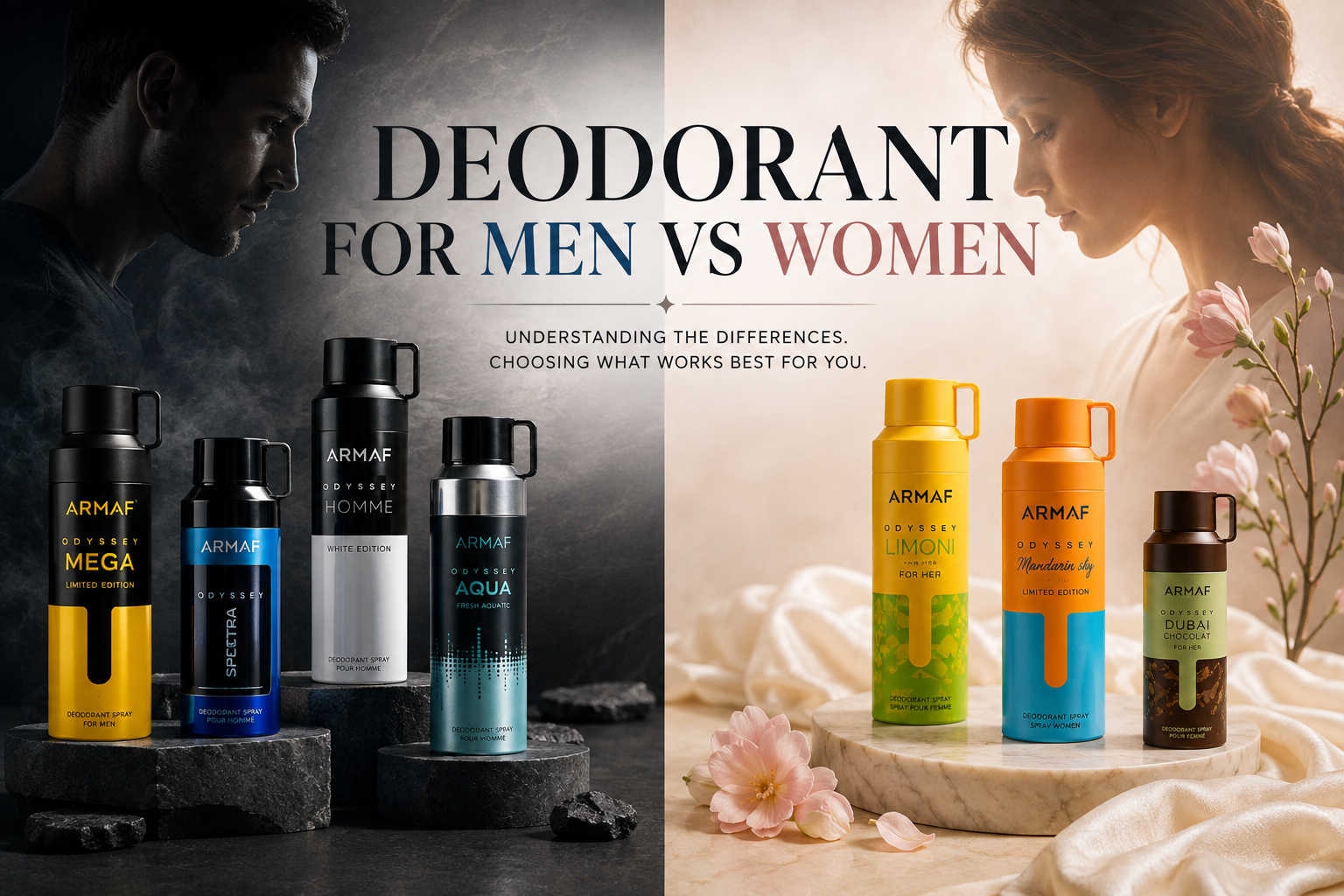
Walk into any store and you will see deodorants split into two sections, one labeled for men and one labeled for women. The packaging looks different, the names sound different, and the colors are usually different too. But if you actually stop and ask whether the product inside is different, the answer gets a lot less clear. In this blog, we will break down what really separates a men’s deodorant from a women’s deodorant, and what actually matters when you are picking one for yourself.
What Is Actually Inside A Deodorant
At its core, a deodorant is made to do one simple job, which is to control body odor. Body odor happens when sweat mixes with bacteria on the skin, and a deodorant works by targeting that bacteria or by masking the smell with fragrance. Most deodorants, whether marketed for men or women, use the same basic ingredients to do this. This includes alcohol, which helps the scent evaporate and spread, along with fragrance oils, and sometimes mild antibacterial agents.
So when you look at the actual formulation, there is rarely a big difference between a men’s and a women’s version from the same brand. The core job the product is doing on your skin is the same either way.
So What Is Actually Different
If the formula is mostly the same, what is the point of splitting deodorants into men’s and women’s versions in the first place? The real difference usually comes down to three things.
- Fragrance profile This is the biggest and most noticeable difference. Deodorants marketed for men often lean towards woody, spicy, or citrus notes, since these are generally seen as more masculine scent categories. Deodorants marketed for women often lean towards floral, fruity, or sweet gourmand notes, since these are generally seen as more feminine. But this is a marketing choice more than a biological one. A citrus or woody scent does not smell different on a man’s skin than it would on a woman’s skin.
- Packaging and branding Color, bottle shape, and the name of the product are usually built around who the brand wants to sell it to. A can with a black and silver design and a bold name is aimed at men, while a can with soft colors and a name like a flower or fruit is aimed at women. None of this changes what is inside the can.
- Strength of scent or marketing language Some brands market men’s deodorants as stronger or longer lasting, and women’s deodorants as gentler or softer. In reality, this often comes down to the fragrance concentration used, not a fundamental difference in how the product works on the body.
Can Women Use A Men's Deodorant, Or Men Use A Women's Deodorant
Yes, in most cases, they absolutely can. Since the core formula is usually the same, there is no real functional reason a man cannot use a floral deodorant, or a woman cannot use a woody or citrus one. The only real factor is personal preference, meaning which scent you actually enjoy wearing and which one suits your daily routine.
This is actually reflected in how many brands package their deodorants today. On Perfuminate, several popular deodorant sprays are labeled unisex, built for both men and women, rather than being split by gender at all.
For example, Armaf Odyssey Mega Deodorant Spray is made for both men and women, giving a fresh, everyday scent that is not locked into either category. Similarly, Armaf Odyssey Aoud Deodorant Spray is also built for both men and women, offering a long lasting scent that works well no matter who is wearing it. These are good examples of how the line between men’s and women’s deodorants is a lot more blurry than the packaging in a typical store makes it seem.
Why The Gender Split Still Exists
If the difference is mostly about scent and marketing, why do brands still split deodorants by gender at all? A big part of it comes down to shopping habits. Most people are used to browsing a men’s or women’s section, and having clear categories makes it easier for shoppers to quickly find something that matches the kind of scent they usually prefer. It is more about guiding the buying decision than reflecting an actual difference in the product itself.
There is also a cultural angle to this. Certain scent families have been associated with masculinity or femininity for decades, even though there is nothing biological tying a particular smell to a particular gender. Musk and wood have been linked to men’s grooming products for a long time, while floral and fruity notes have been linked to women’s products. Brands lean into these associations because they are familiar to shoppers, not because they are rooted in any real difference.
How To Choose The Right One For You
Instead of picking a deodorant just because it is labeled for your gender, it helps to think about a few practical points.
- Pick a scent you actually like. If you prefer a fresh, citrus scent, go for that, regardless of whether the packaging says it is for men or women.
- Think about how you want to layer it. If you plan to wear a deodorant under your regular perfume, a lighter, more neutral scent will blend better than something very strong or very sweet.
- Consider unisex options. Products built for both men and women often give you the freedom to choose based on scent alone, without worrying about gender labels at all.
- Check how long it lasts through your day. If you are active or live somewhere hot, a longer lasting formula will matter more than the label on the can.
Final Thoughts
When you break it down, the difference between a men’s and a women’s deodorant is mostly about fragrance, packaging, and marketing, not the actual formula doing the work on your skin. Both are built to do the same basic job, which is keeping you fresh through the day. If you like a scent, there is no real reason to avoid it just because of which section it was sitting in at the store.
If you want to skip the gender labels altogether, browse the Deodorants collection at Perfuminate, where several sprays are made to suit both men and women.
Do men's and women's deodorants actually work differently on the skin?
Not really. Most deodorants from the same brand use a similar base formula, so the way they work on the skin is largely the same regardless of the label.
Is it fine for a woman to use a men's deodorant?
Yes. Since the formula is usually similar, the main difference is scent, so it comes down to personal preference rather than any functional issue.
Why do deodorants smell different if the men's and women's versions are similar?
The fragrance oils used are different, which is intentional. Brands choose scent profiles like woody or floral based on who they are marketing the product to.
Are unisex deodorants a good option if I do not want to think about gender labels?
Yes. Unisex deodorants are built to suit both men and women, so you can pick based purely on the scent you like.
Should I choose a deodorant based on scent or based on how long it lasts?
Both matter, but scent is more about personal taste, while longevity depends on your lifestyle, such as how active you are or how hot the weather is where you live.